
University’s colloquium celebrates progress and next steps

La Sierra University President Christon Arthur delivers a keynote address during faculty and staff colloquium on Sept. 15.
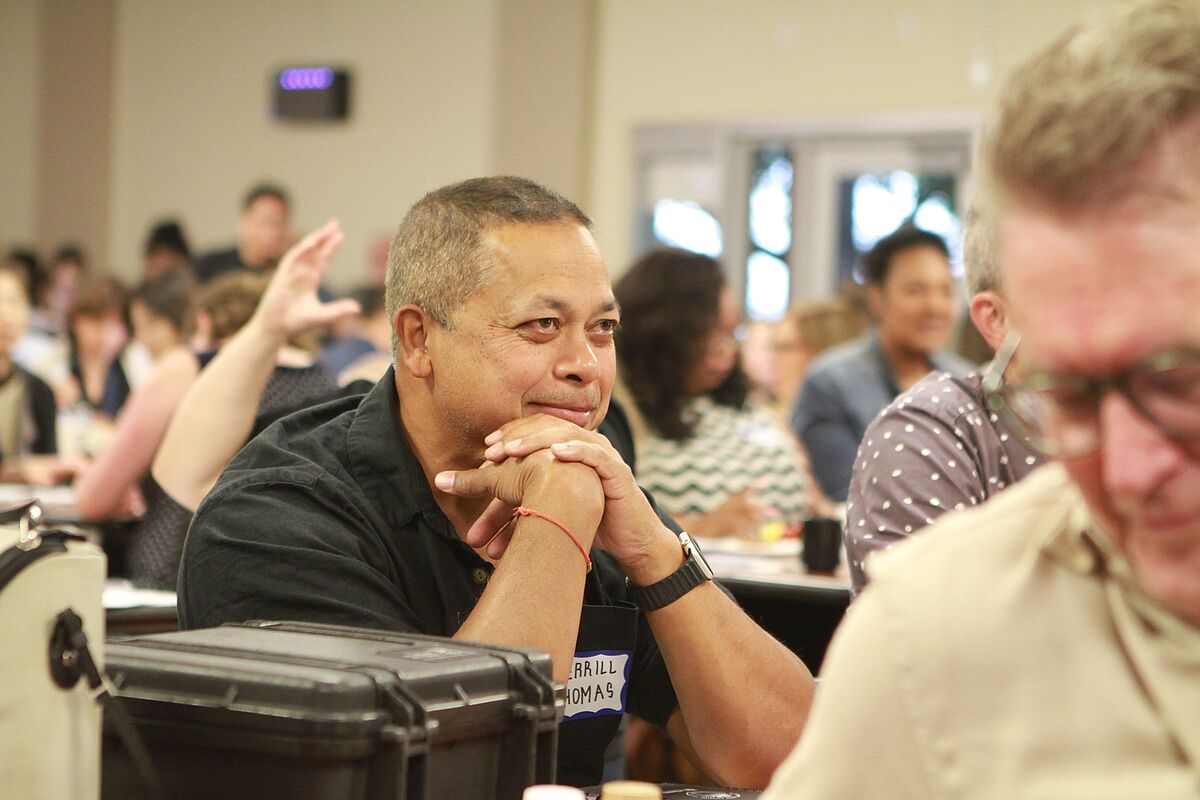
Art+Design Chair Terrill Thomas listens to presentations during September's employee colloquium that occurs prior to the start of the new school year.

La Sierra University Church Lead Pastor Iki Taimi delivers a devotional to start colloquium on Sept. 15.
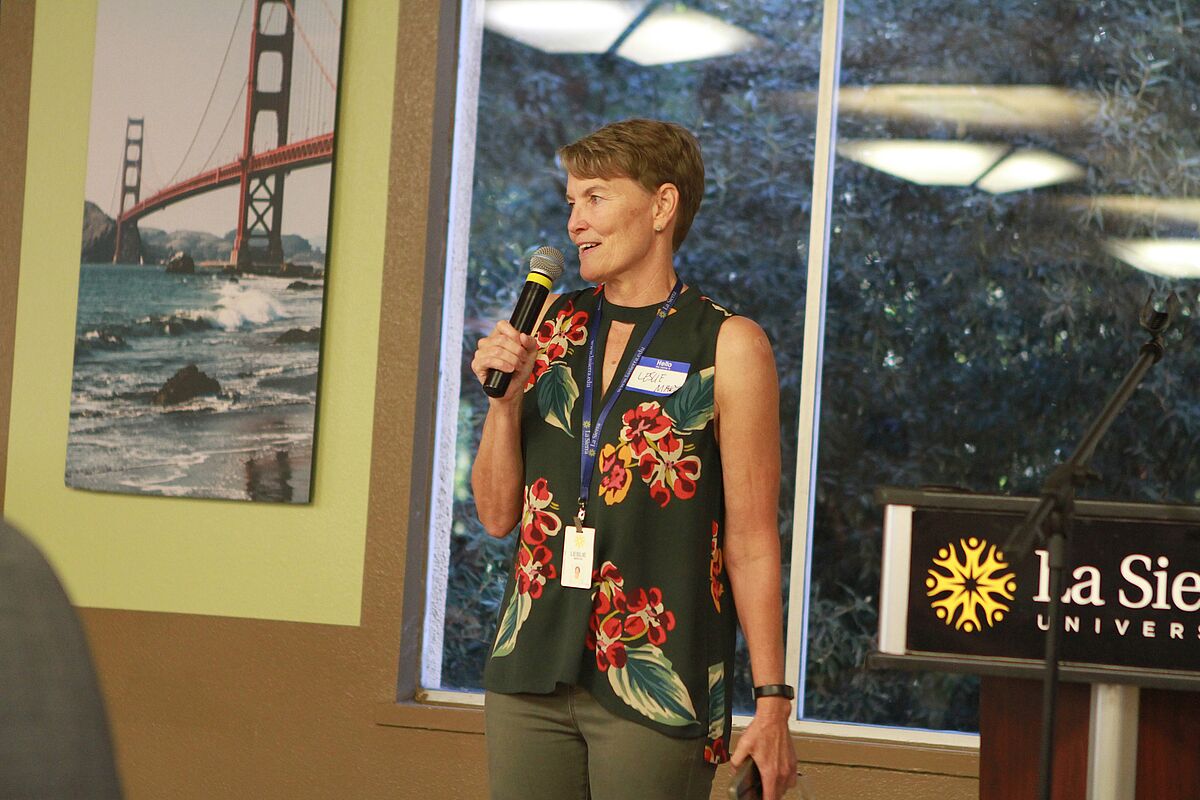
La Sierra University Interim Provost Leslie Martin addresses employees during colloquium in September.
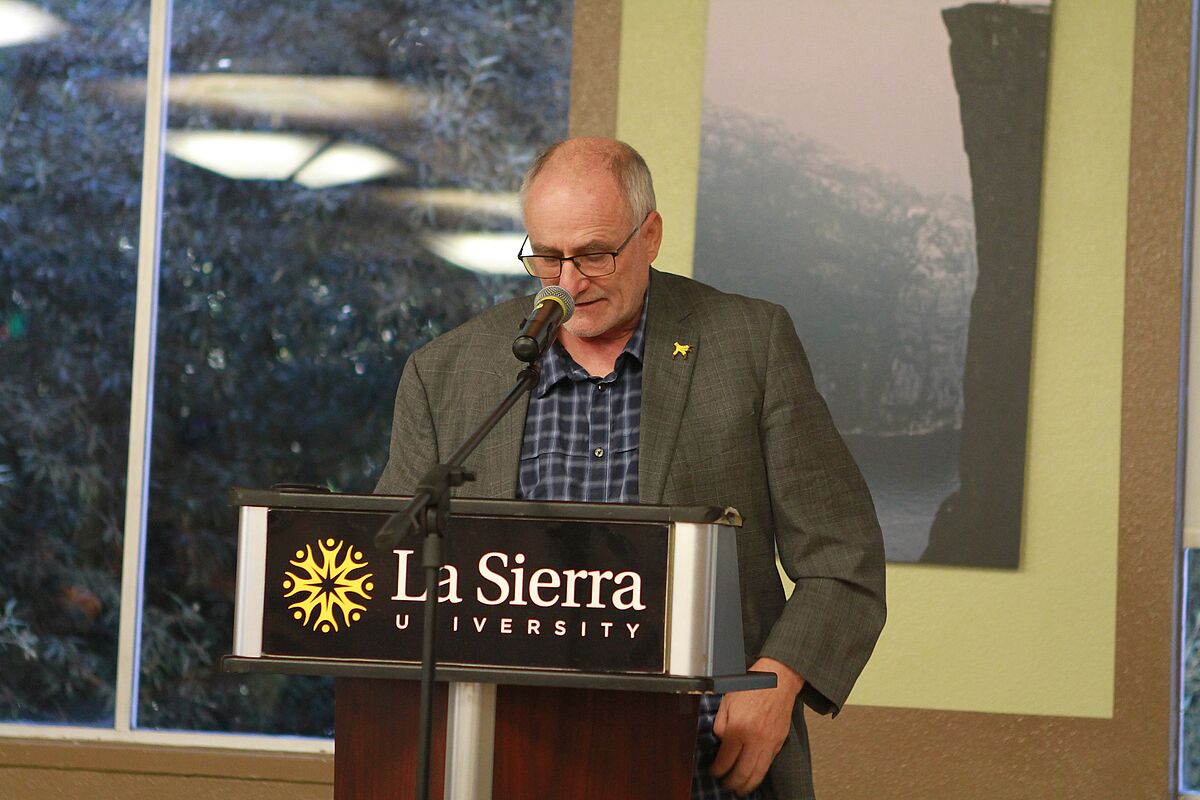
H.M.S. Richards Divinity School Dean Friedbert Ninow gives an overview of the school's plans and programs.
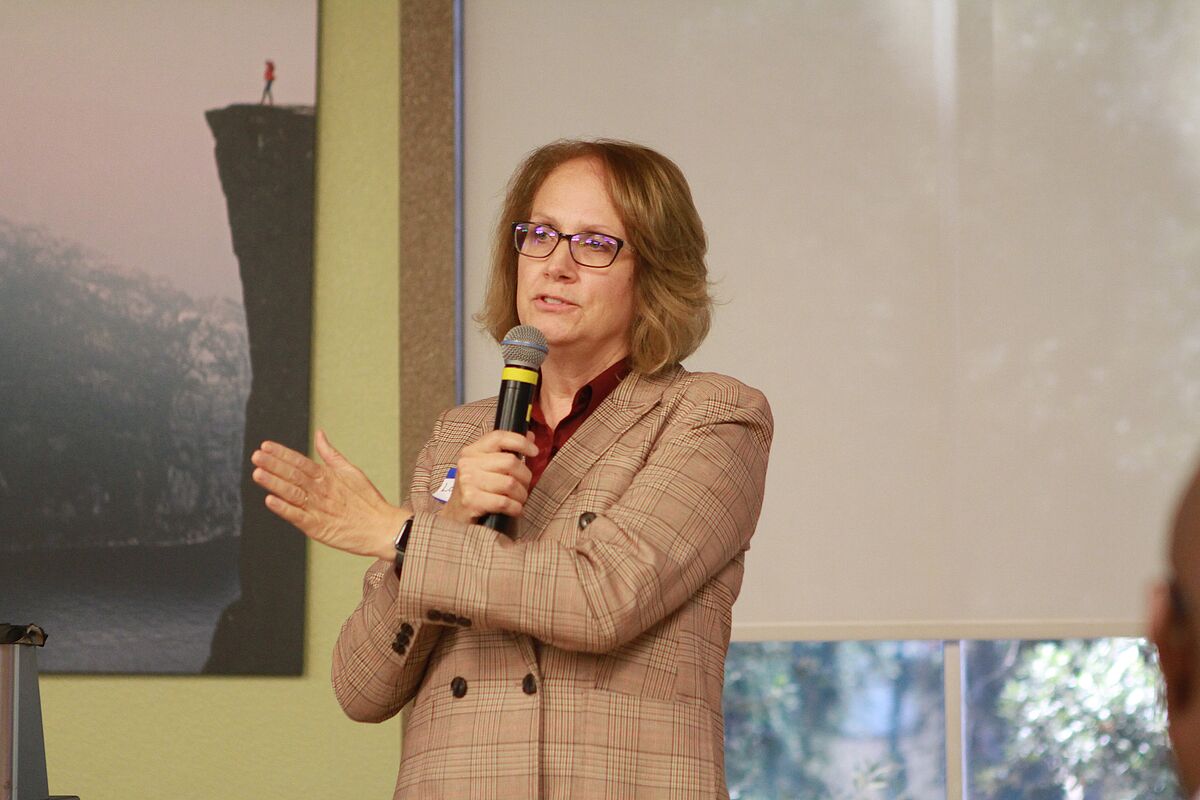
Lora Geriguis, dean of the College of Arts & Sciences gives a report on the college.
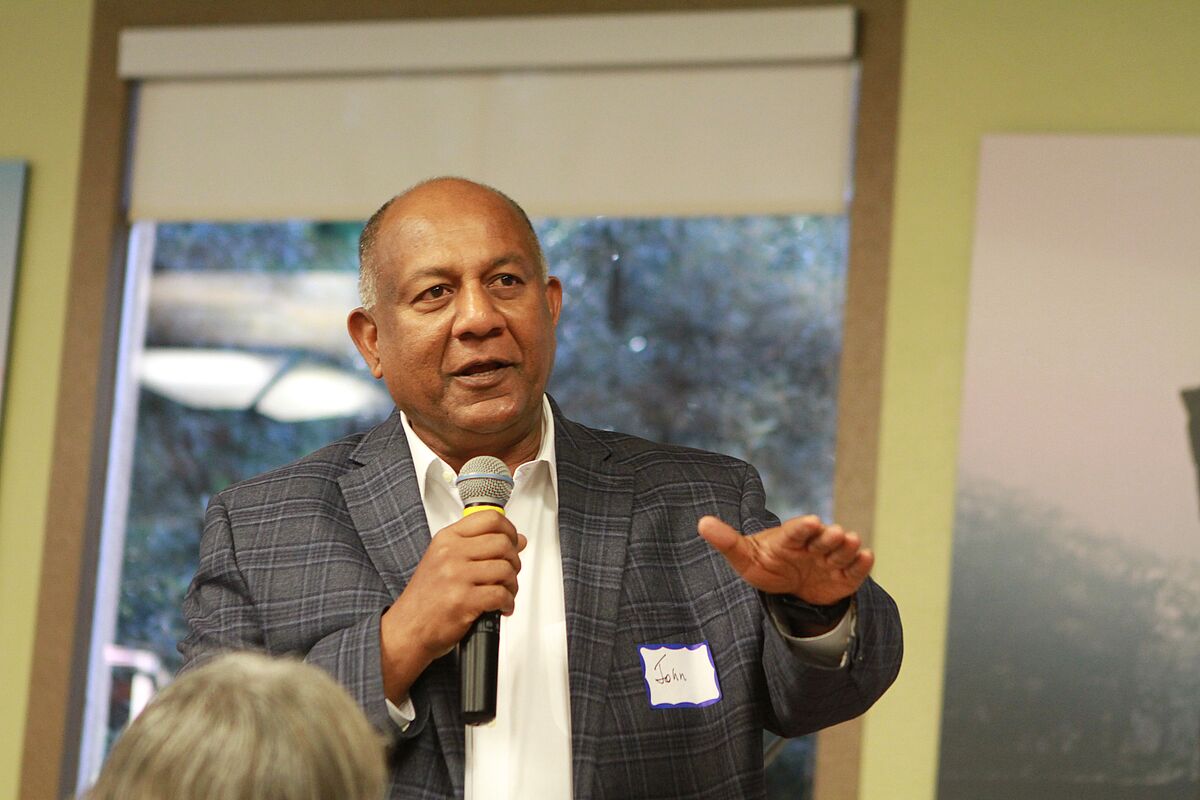
John Thomas, dean of the Zapara School of Business provides a report on the business school for colloquium.
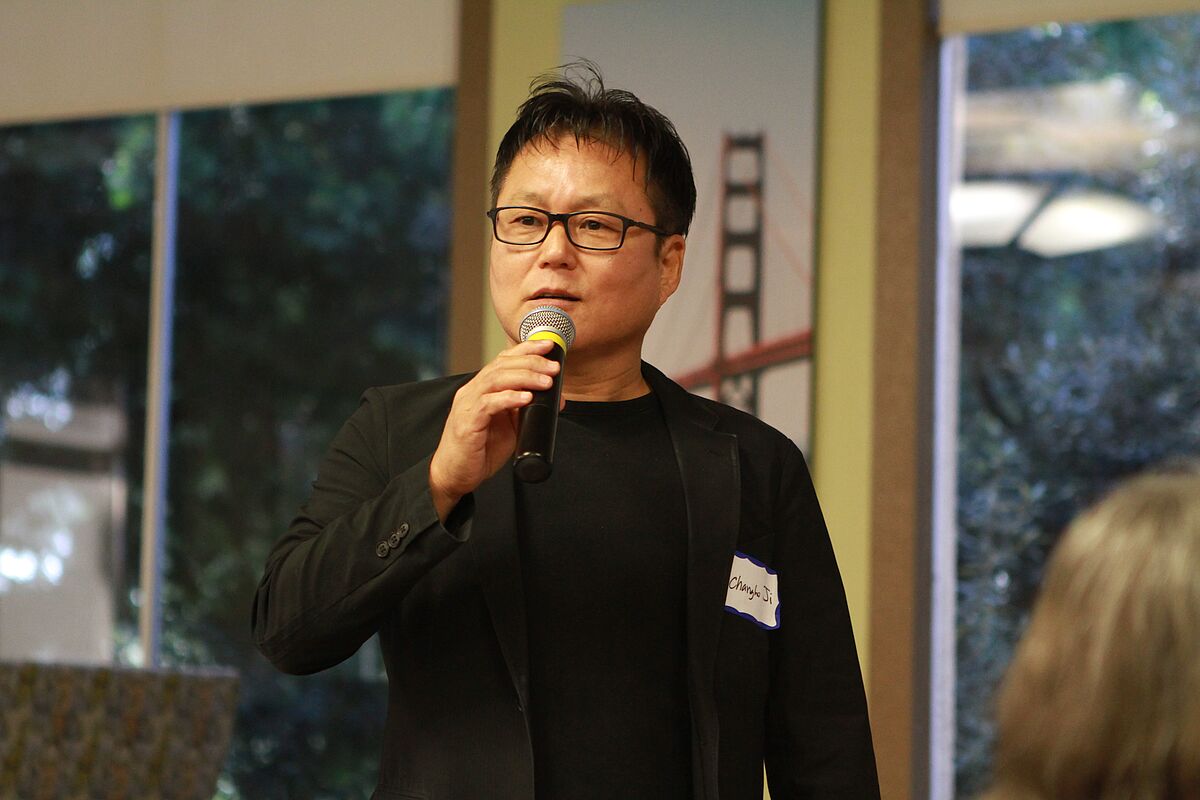
School of Education Dean Change Ho-Ji discusses the school and its plans.
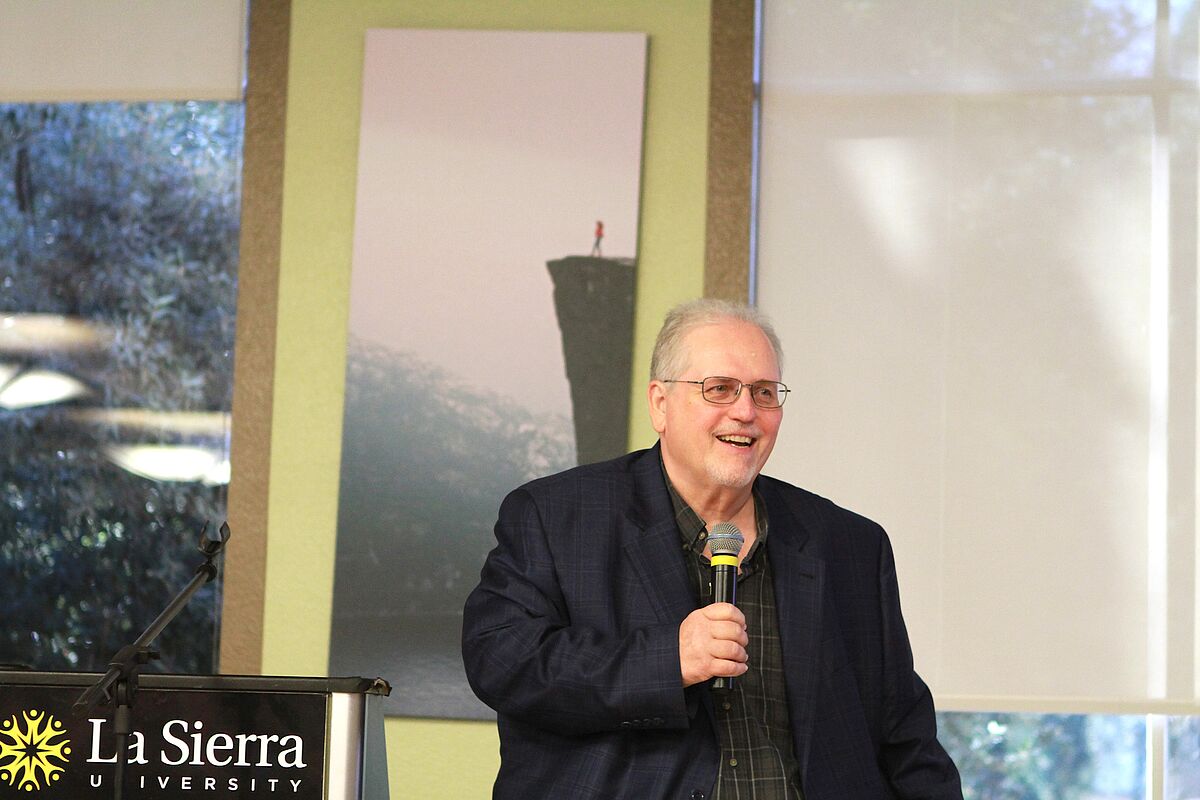
Marvin Payne, director of Title V grants gives a report.
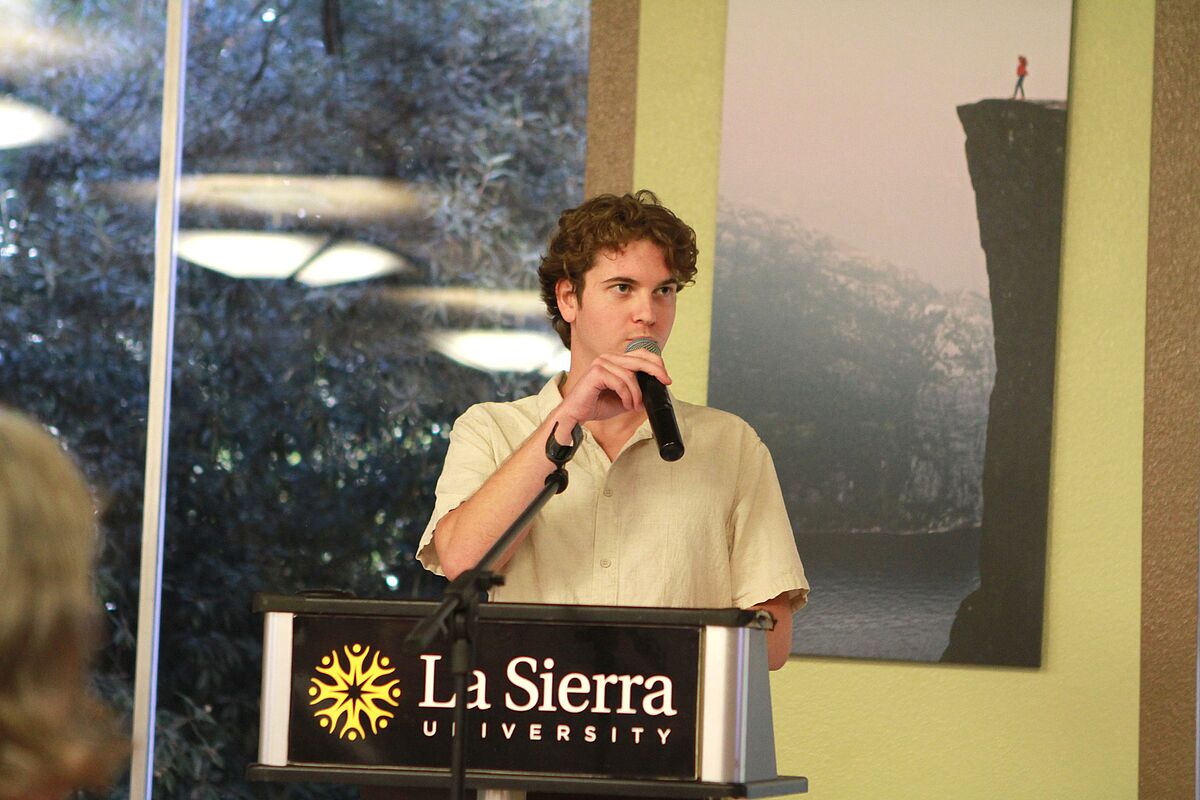
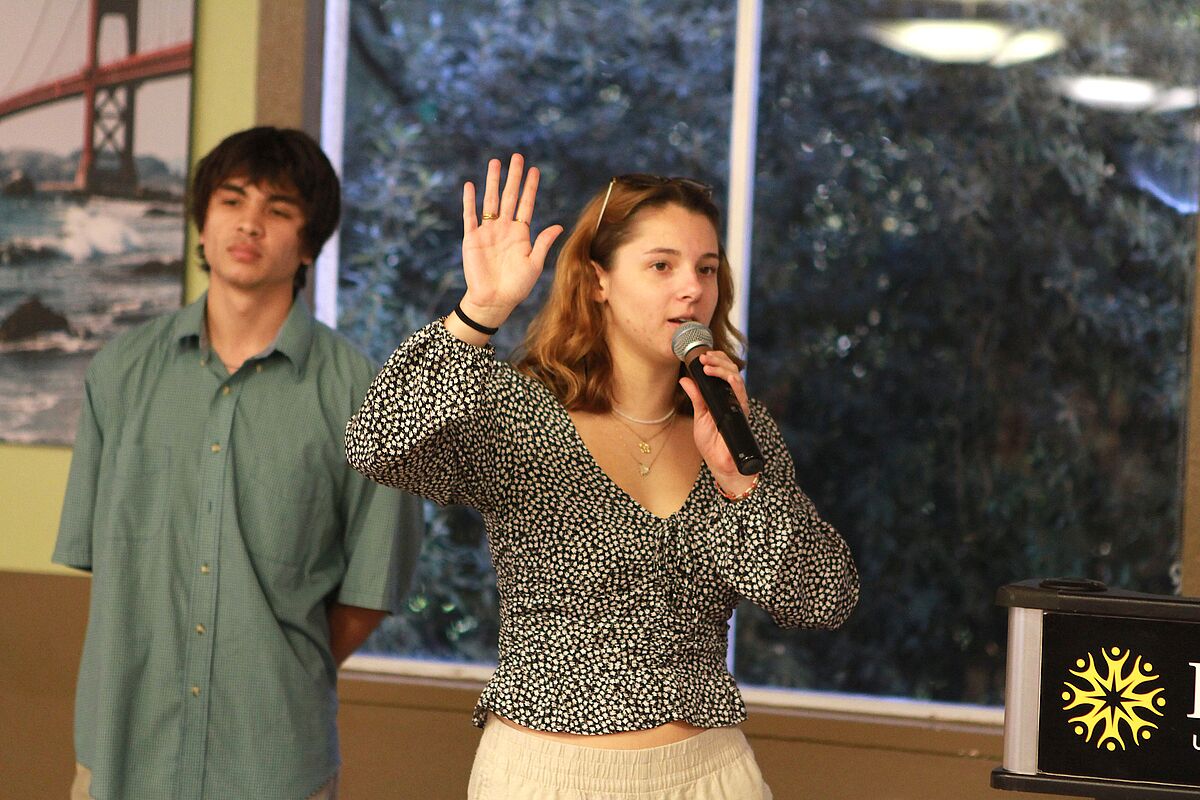
Mark Skjerven, the marketing department's digital media manager, above, along with social media team members Morgan Schmitz and Kyle Rumble, below, give an update on social and digital media campaigns and projects.
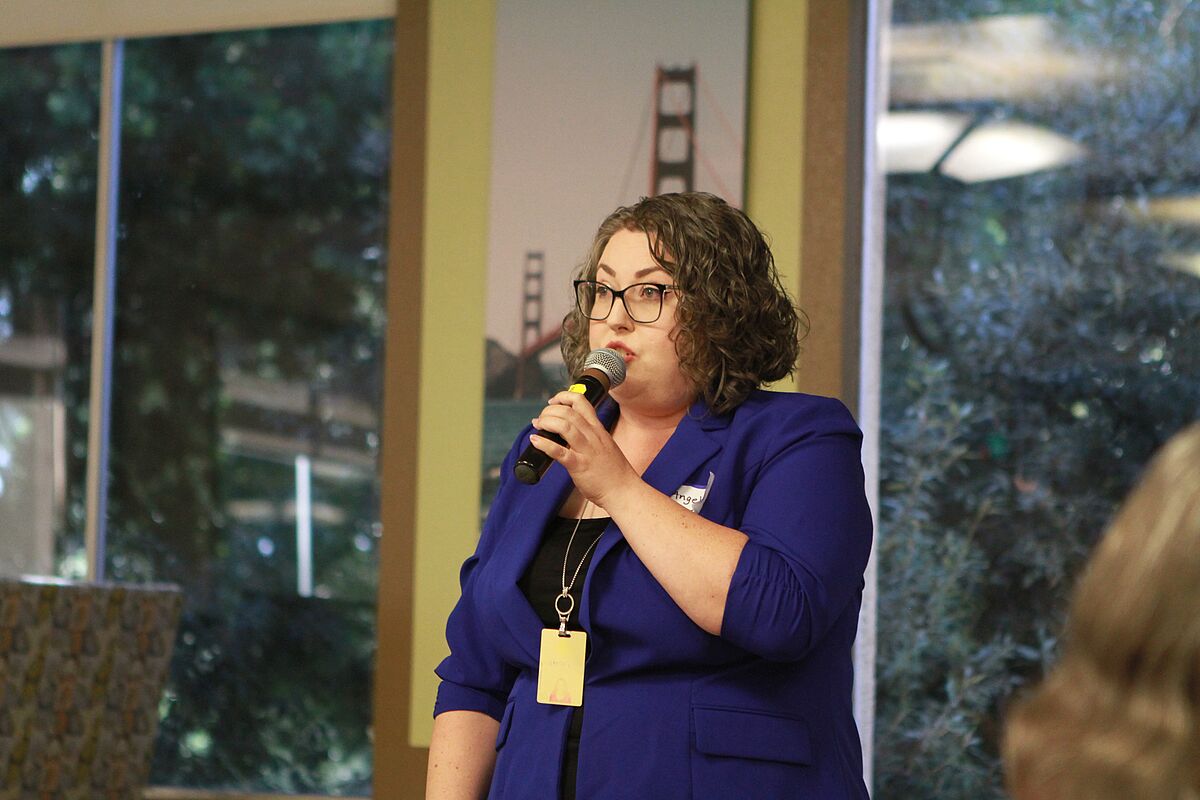
Registrar and Director of Records Angela Reynolds gives an update on her department.
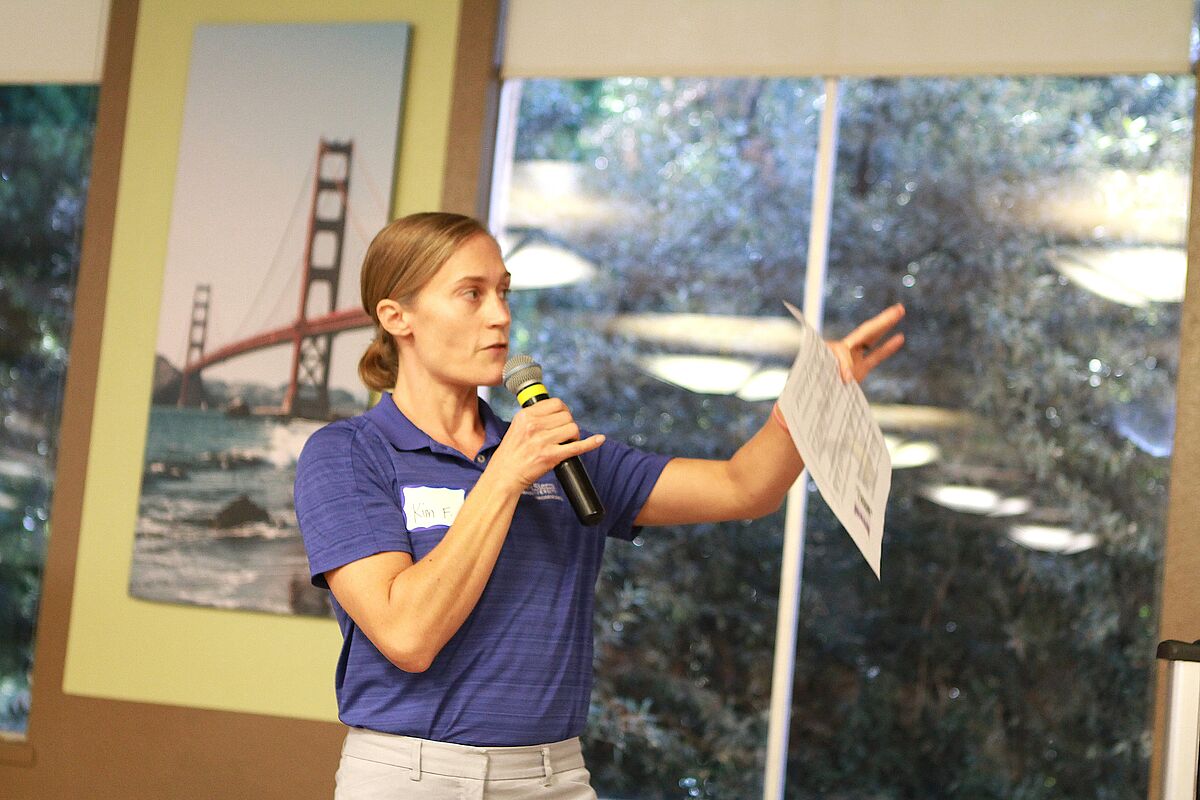
Kimberly Feiler, chair of Health & Exercise Science provides an overview.
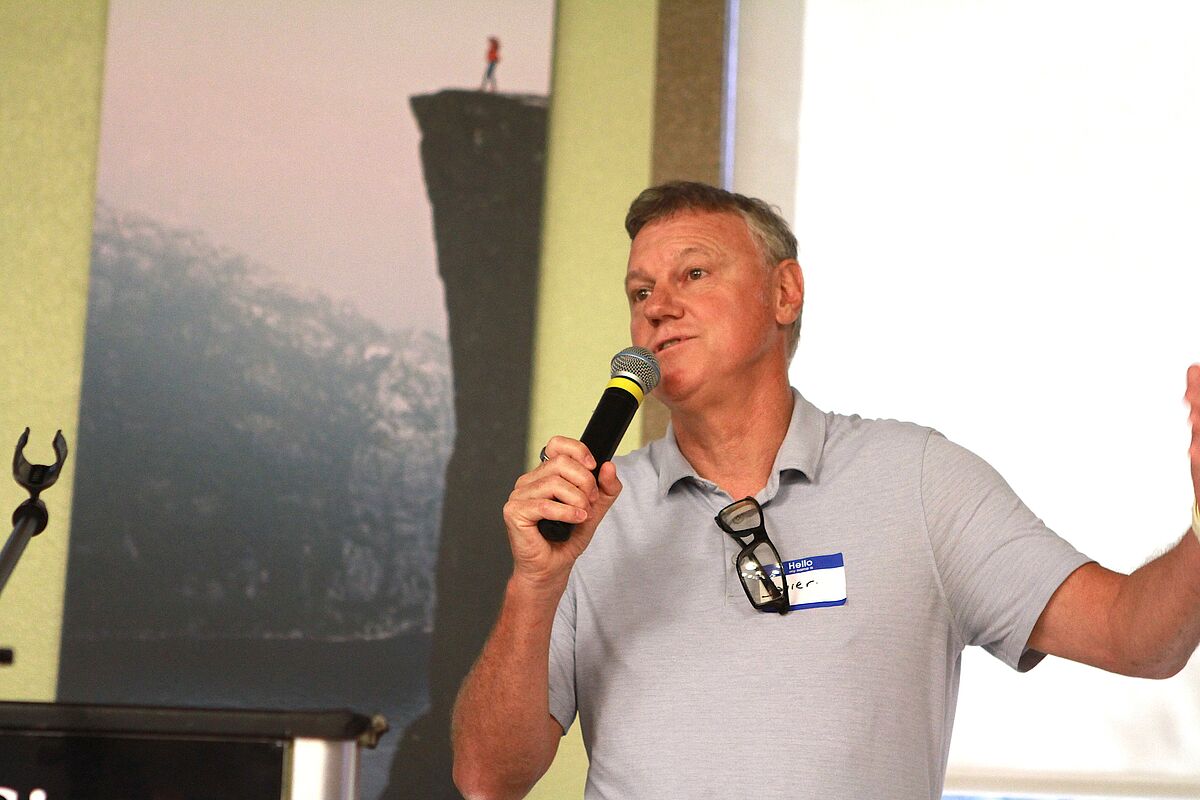
Athletics Director Javier Krumm talks about the university's sports programs and upcoming changes.
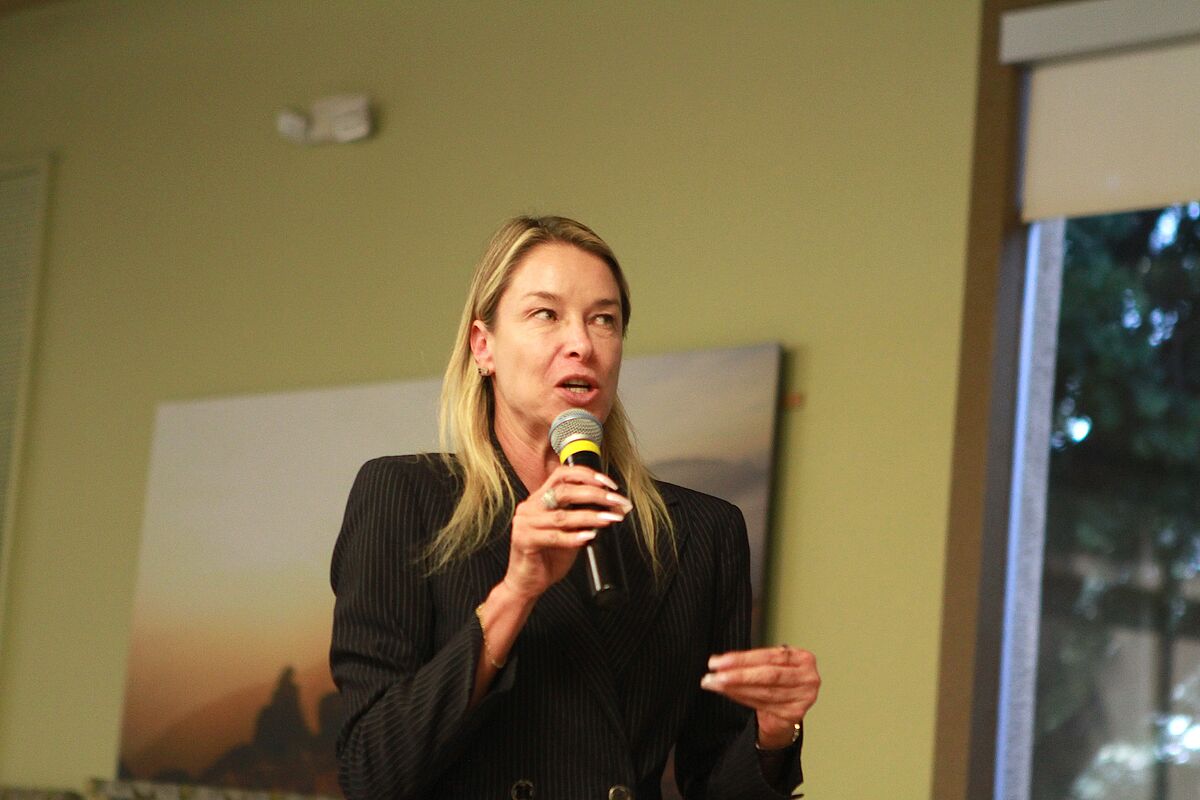
Melissa Tafoya, director of the new Division of Pre-Health, describes the program and open house for the new office and student services wing.
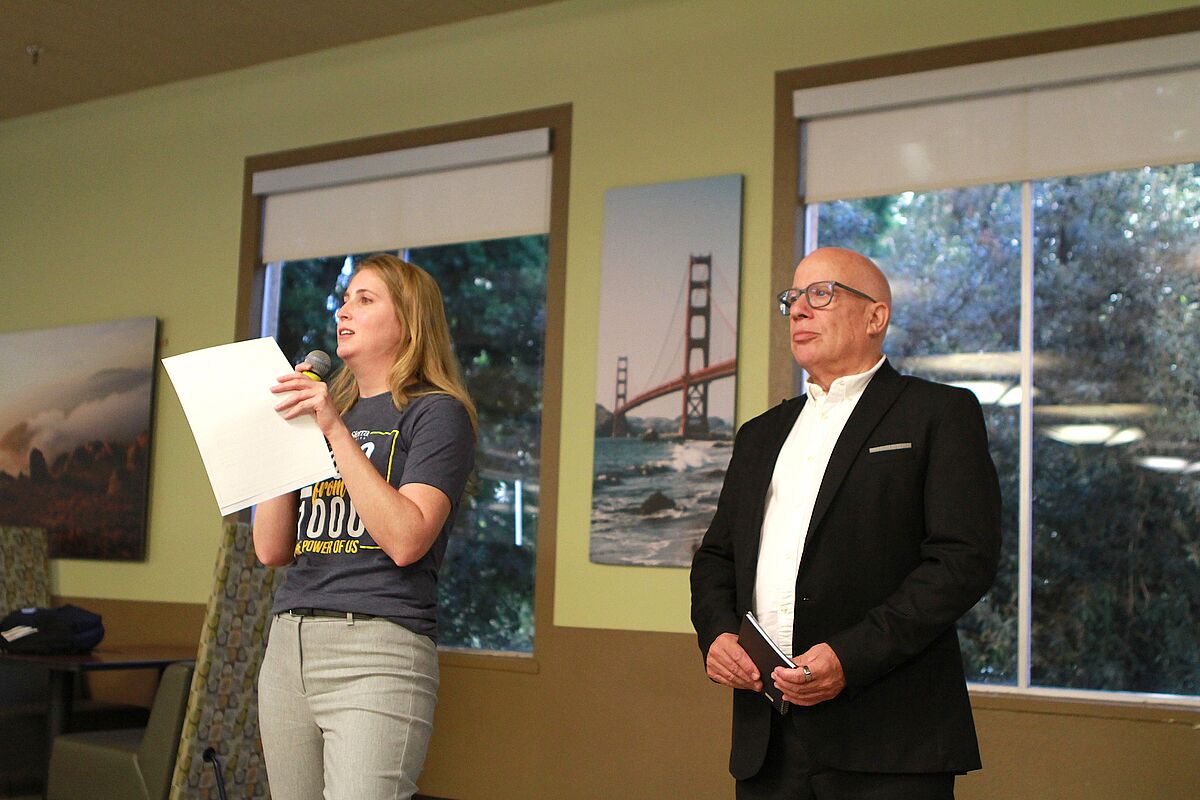
Kristine Barker, communications director for the Office of Philanthropy and philanthropy Vice President Norman Yergen address the audience.
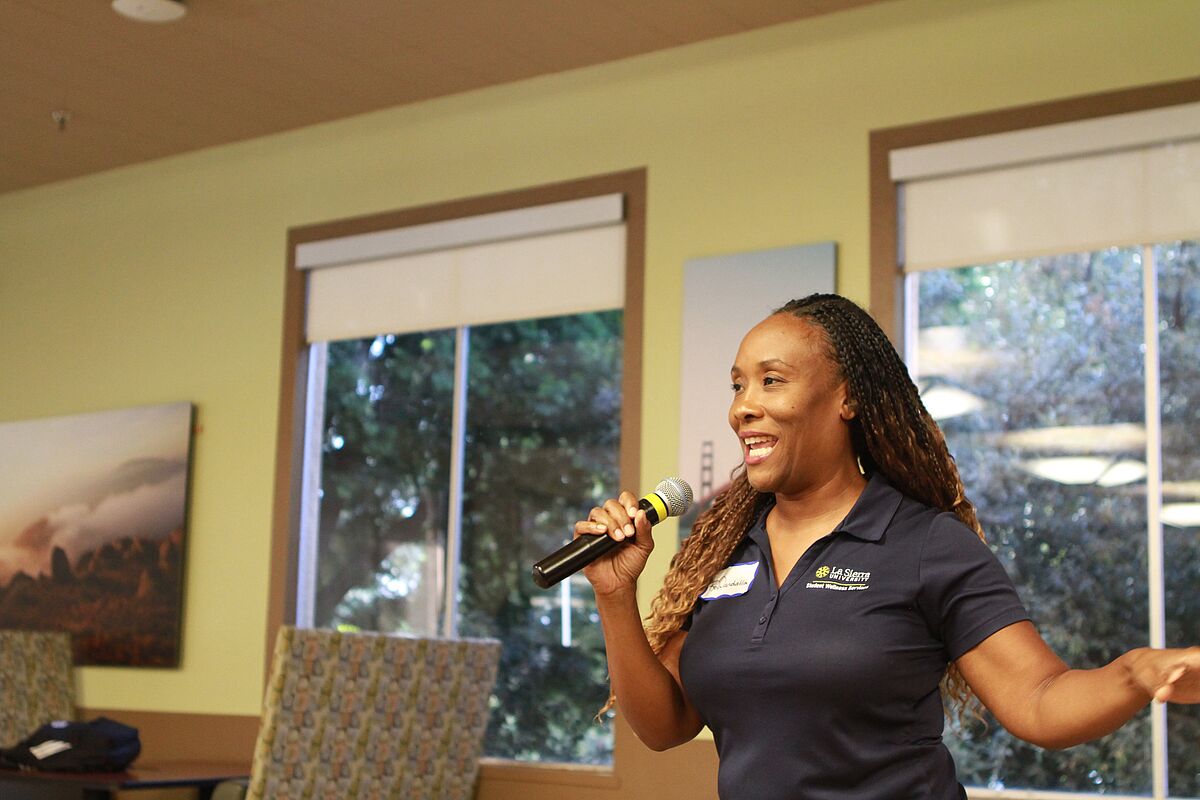
Student Wellness Services Director RoWandalla D. Goudeau gives an update on the student health center and services.
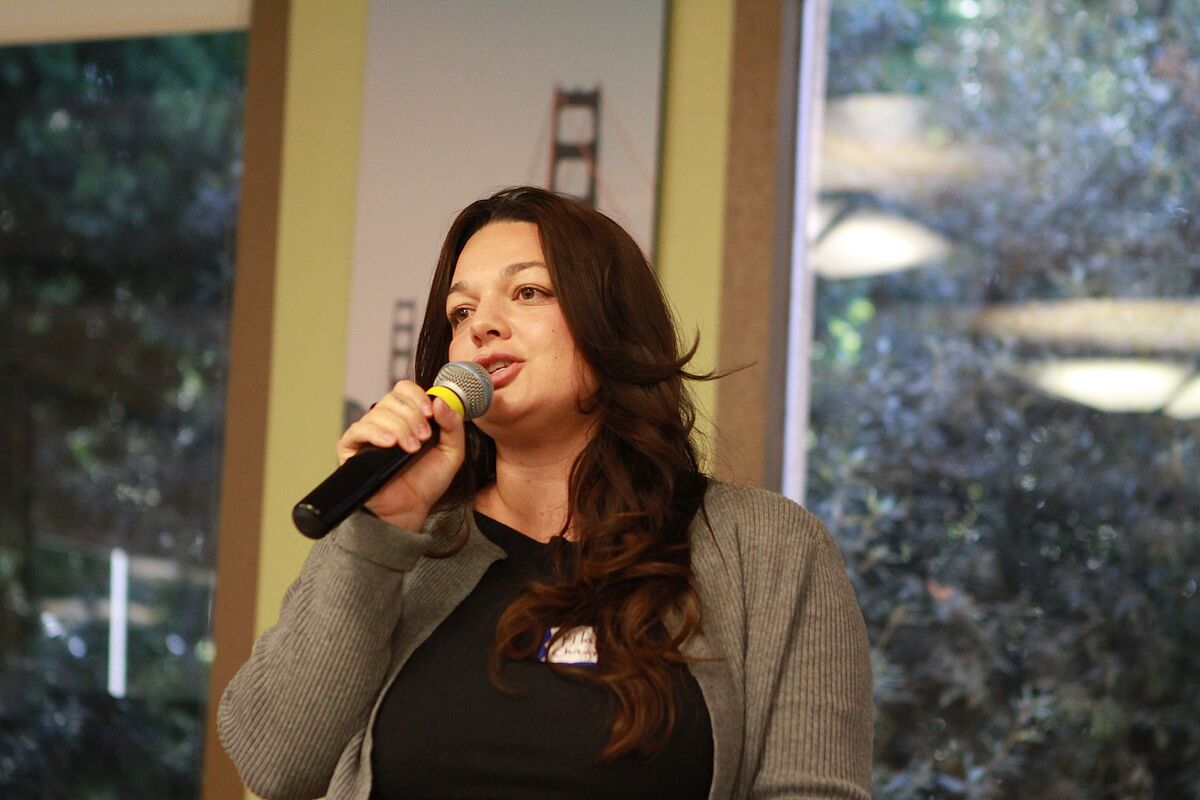
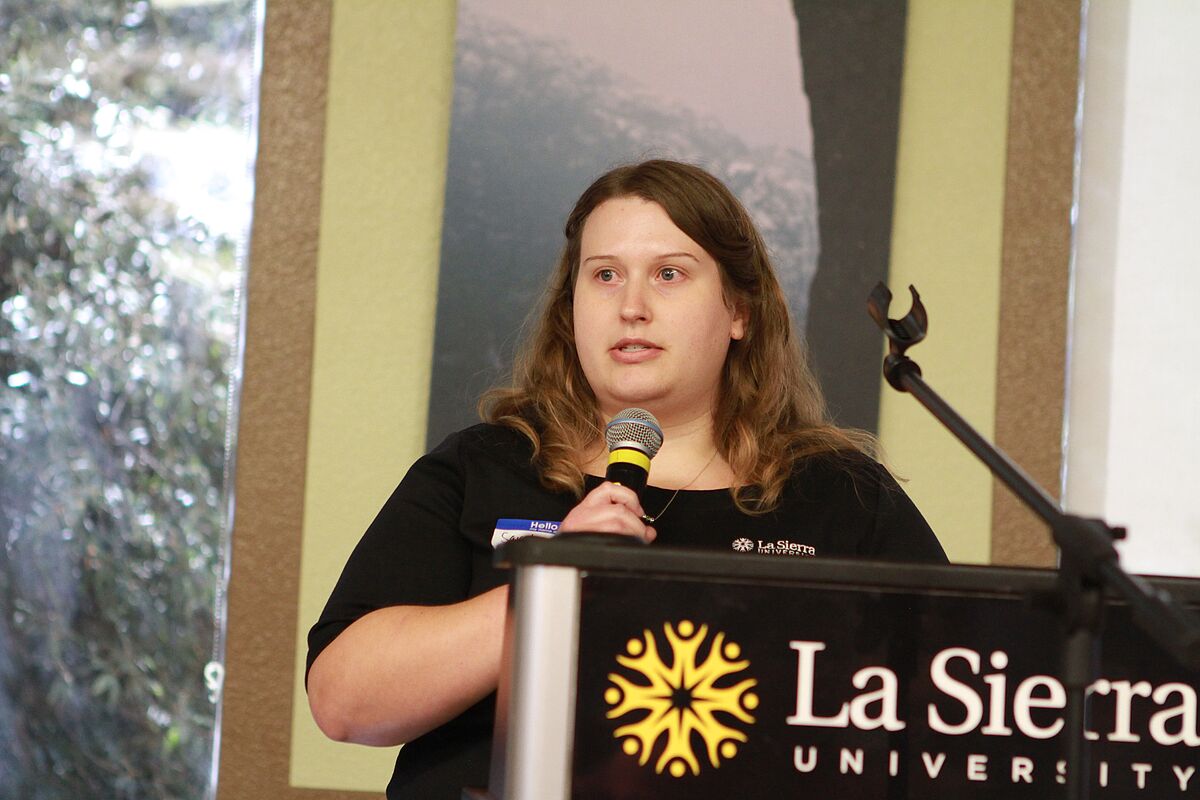
Sarah Spencer, senior associate director of recruitment gives an update.

A representative of Blue Zones Project Riverside addresses the colloquium audience on Sept. 15.
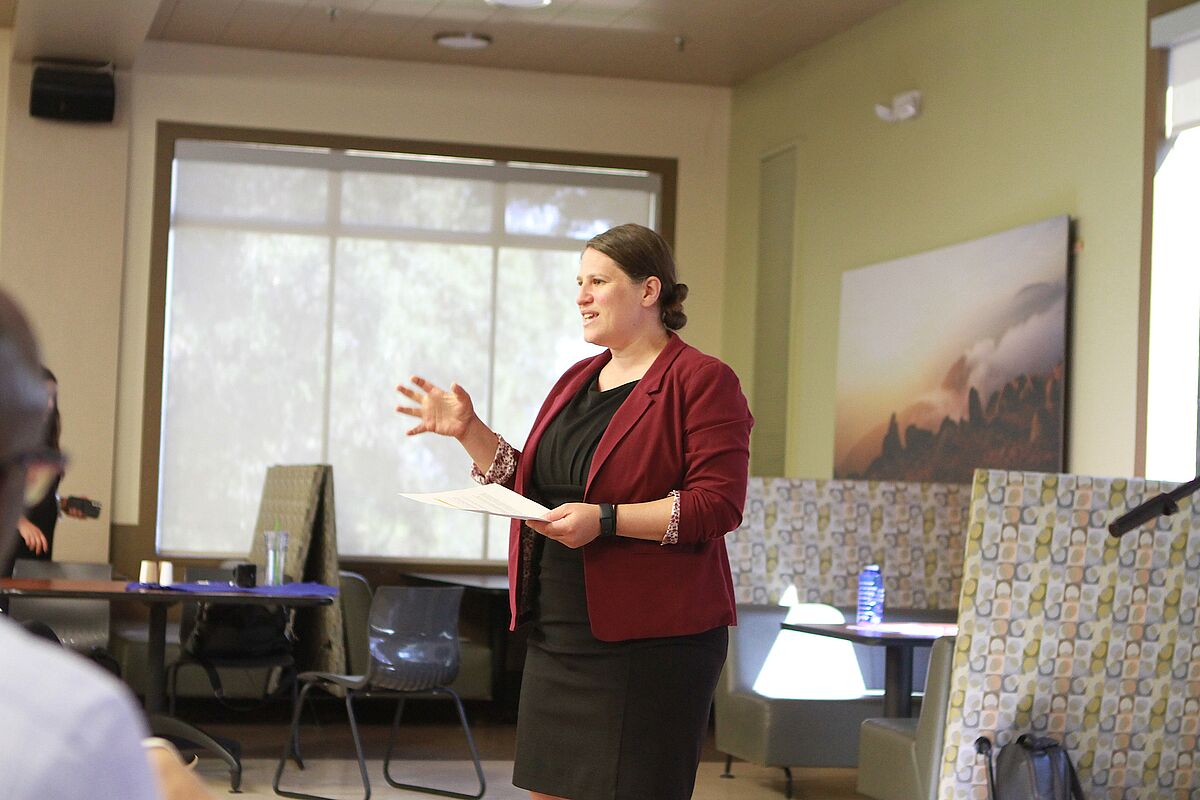
Erin Edwards, executive director of Blue Zones Project Riverside leads the audience in exercises designed to discover individual purpose.
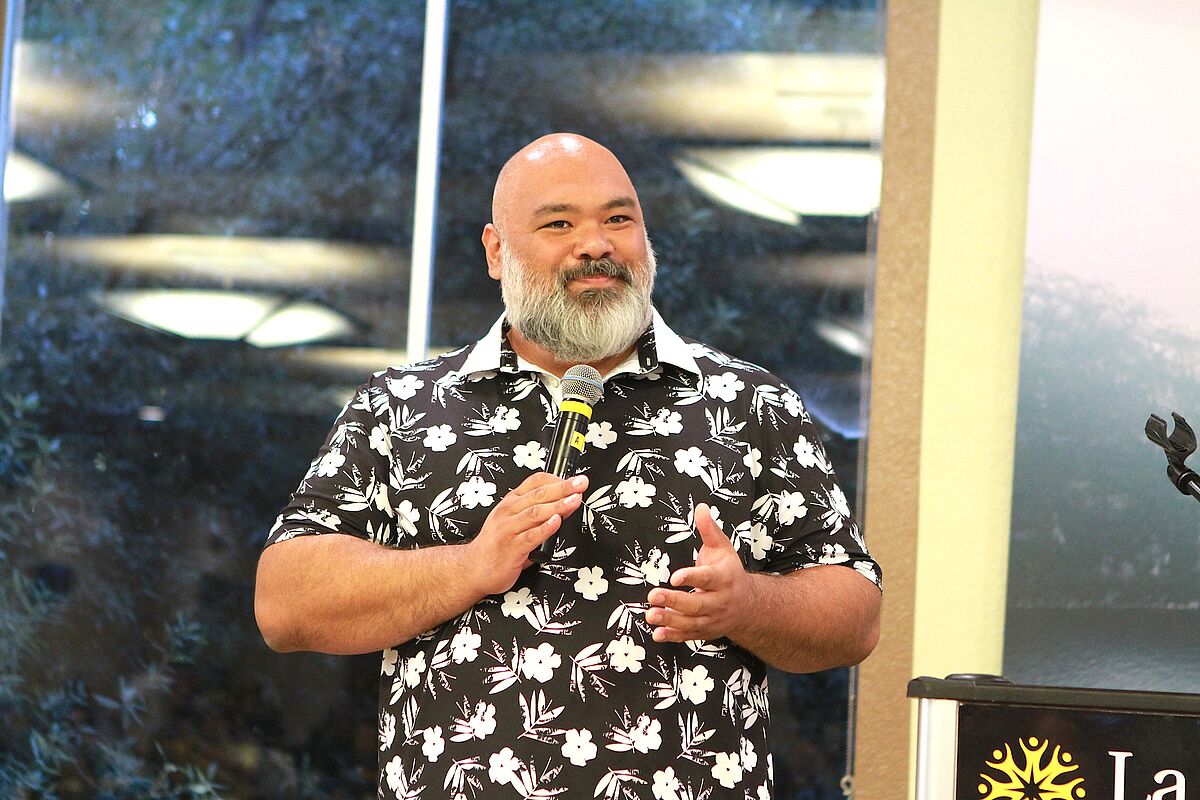
University associate chaplain, Pono Lopez delivers a devotional message for the second day of colloquium on Sept. 16.
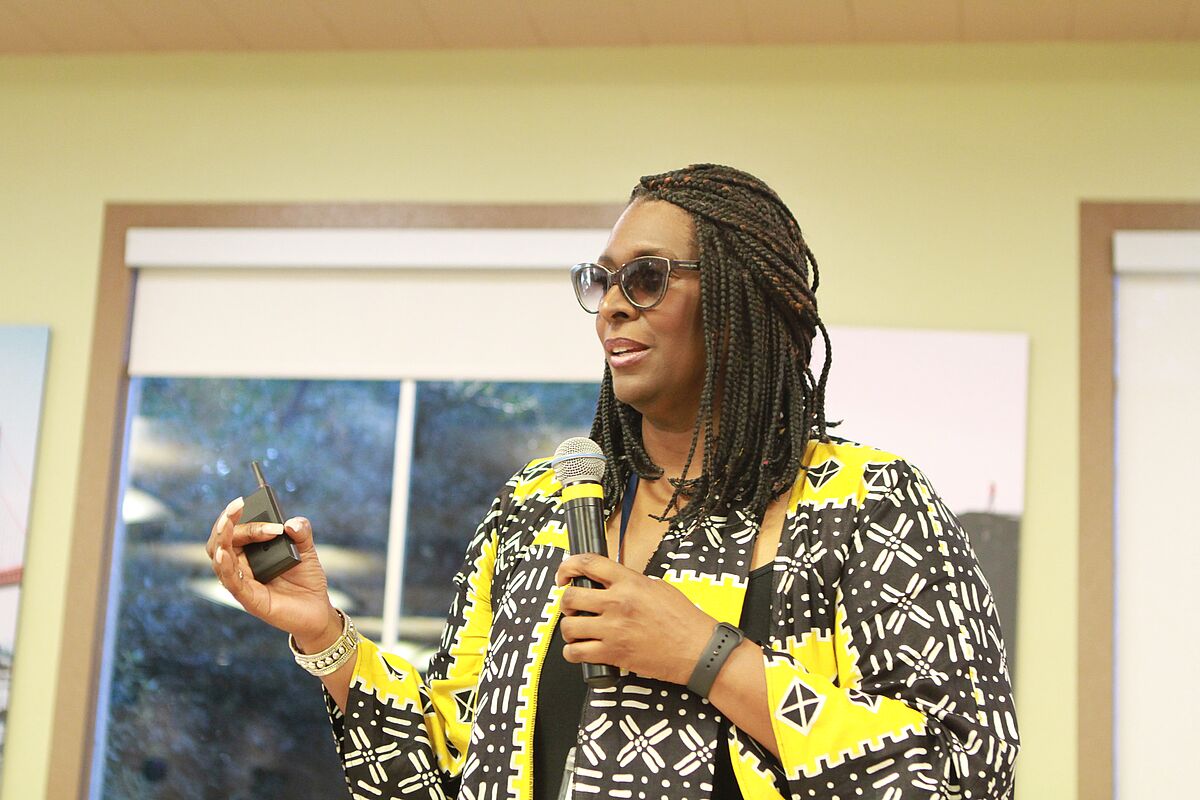
Newly hired Associate Provost for Institutional Engagement & Student Experience Kathleen Purnell introduces herself to the audience and leads conversations and exercises that highlight the importance of belonging and wellbeing.
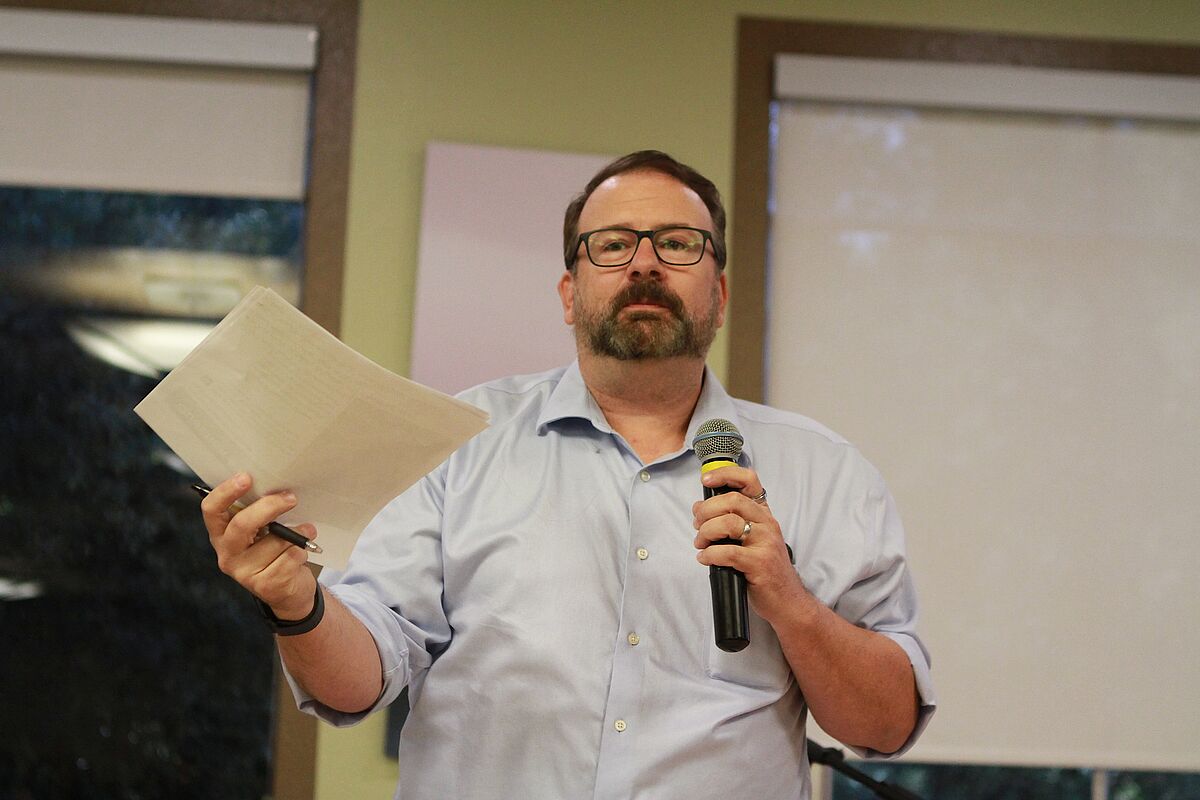
Lloyd Trueblood, professor of biology and marine biologist, addresses the colloquium audience and talks about his upcoming expedition off the coast of Bermuda.
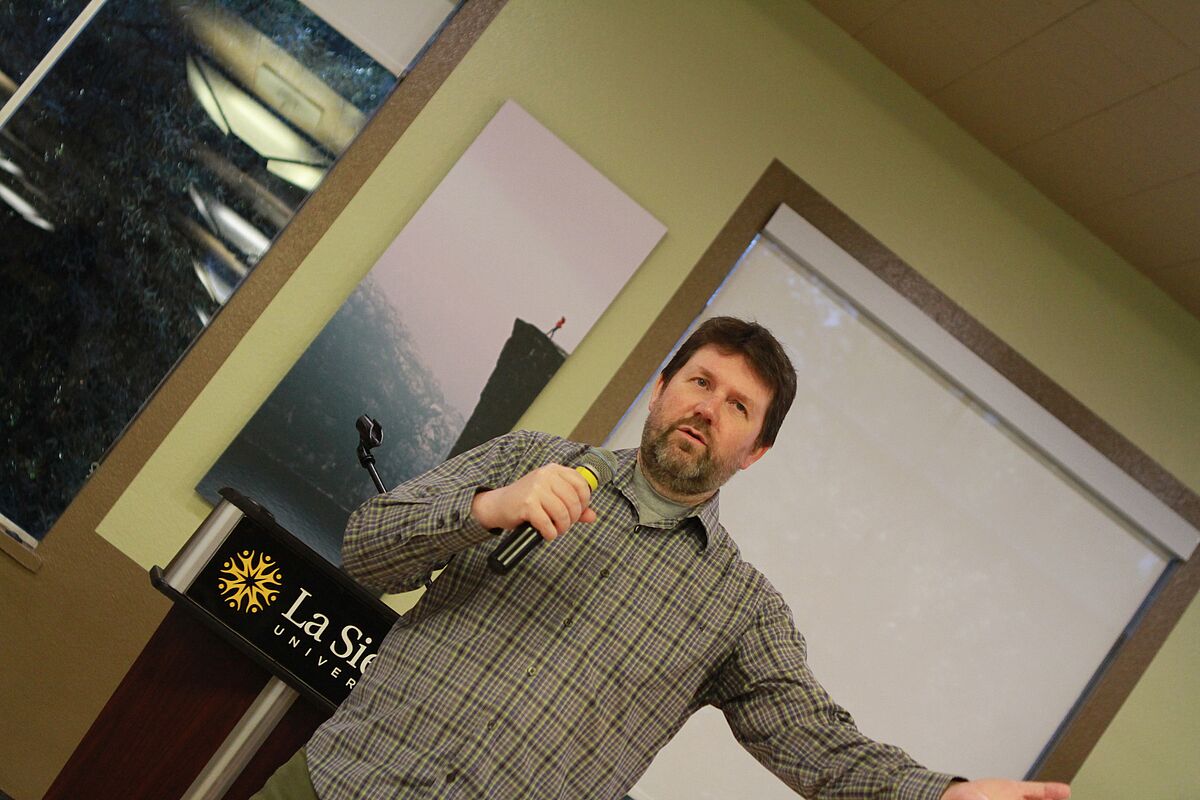
Public Services, Reference & Instruction Librarian Kelly Reed addresses the colloquium audience.
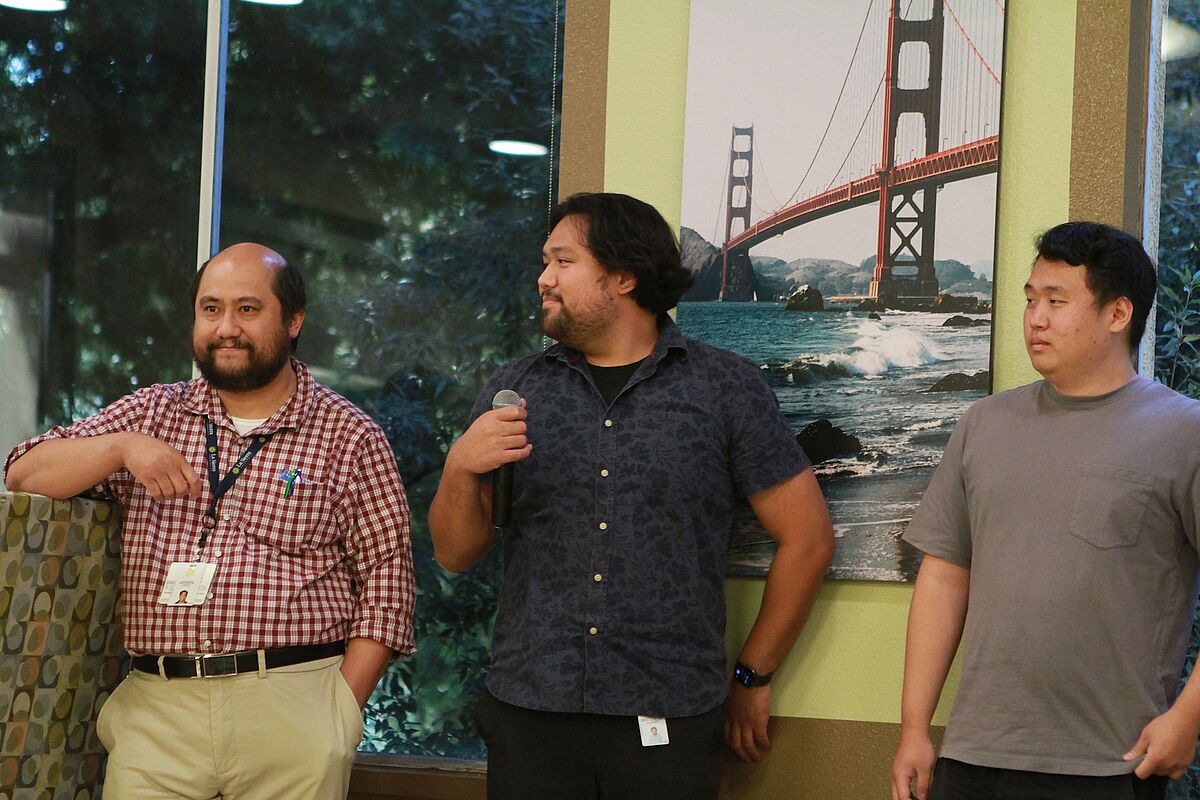
Members of the Information Technology team speak to the audience led by Chief Information Officer Scott Martel, below.
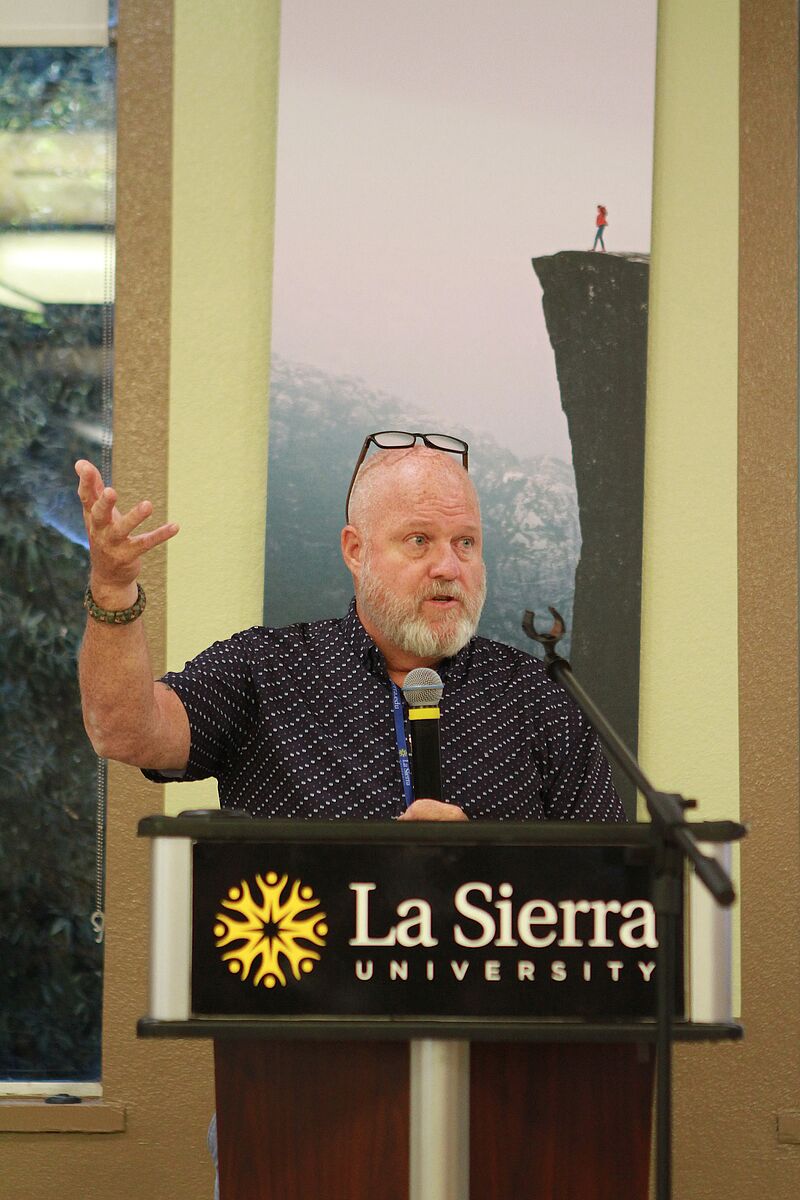
These are among the activities and goals for the 2025-2026 school year and beyond as outlined in an address titled “La Sierra and the Endless Power of &” by La Sierra University President Christon Arthur. His presentation led the school’s annual faculty and staff colloquium held on September 15 and 16. The employee-focused meetings included overviews of progress made in various campus departments, in its three professional schools and liberal arts college. New faculty and staff were introduced and employee milestone years recognized. Workshops were also held on strengthening a culture of belonging on campus and on the importance of cultivation of potential and living out organizational values.
Arthur began his presentation with a brief discussion around institutional identity and several assumptions underpinning it.
“Great [universities] embrace the genius of the ‘and’ and reject the tyranny of the ‘or,’” he stated, citing business management author and researcher Jim Collins. “Who are we now? …We have agency to imagine and create who we are,” he said, noting the university should be a place where failure is not fatal, where intellectual curiosity is pervasive, where the celebration of differences is commonplace, and where dismantling the hierarchy of human understanding and ideas is achievable in the continual pursuit of truth.
He also noted several paradoxical passages of scripture related to yielding, resting, serving, dying and strength and which ultimately lead to a ‘yes-and’ perspective, rather than ‘either-or’ binary.
"We believe in the power of ‘yes-and.’ Our tent is big enough to provide a home for all." – Christon Arthur, President
La Sierra University can be both certain and questioning, academic and creative, idealist and accepting, among other things, he said. “We are a Seventh-day Adventist university. We have identity and we can welcome every other faith. We are so confident in our ideals that we can accept the other who comes in. The La Sierra University of the 21st century will not be intimidated by the other who adds value to us.”
Arthur quoted Collins, saying, “the test of a first-rate intelligence is the ability to hold two opposing ideas in the mind at the same time and still retain the ability to function.
“For every student who enrolls at La Sierra, this is the outcome that we’re after,” Arthur said. “Every academic discipline has to grapple with paradoxical, sometimes contradictory, sometimes competing ideas and perspectives. We believe in the power of ‘yes-and.’ Our tent is big enough to provide a home for all.
“We are accomplished when we are able to invite different perspectives to the table. We bring different minds in and we ourselves will grow,” Arthur continued. “We’ll open the door wide so every person who wants to be here, will be here.”
He pointed to the paradox of embracing protest and partnership, the dance between functioning as an intellectual liberal arts institution and training students for the specifics of their career fields, of embracing both a strong institutional identity while being open to new concepts, of instilling not only knowledge in students, but the value of service to others.
“Universities create knowledge and for too many centuries we ended there,” Arthur said. “You have to ask, for what purpose?”
He also touched on the topic of traditional learning and the broadening impact of artificial intelligence (AI). “The university has a role in how we disseminate, understand and roll out AI,” Arthur said. “We have values and ethics and knowledge, and we believe that we can add to the conversation to make sure that AI is less harmful. But if we say that’s not us, we’re traditional, we’ve denied ourselves the opportunity to participate in the conversation to make that product better.”
He also reported that the La Sierra University Board of Trustees, during an annual retreat that weekend, voted to approve the establishment of a Staff Senate. He noted that La Sierra is only the second Seventh-day Adventist higher education institution in the North American Division of Seventh-day Adventists to have a staff senate. The staff senate symbolizes the agency of staff, codifies their voice and provides opportunity for the staff to share their recommendations with the administration.
Prioritizing Progress
In an overview of the university’s finances and enrollment, the fiscal year ending June 30 showed better-than-expected financial footing and freshman enrollment stood at 20% higher than at last year’s enrollment census date, Arthur said.
As of this year’s census date, new freshman enrollment stood at 26% above last year’s freshman count, incoming graduate students increased 38% over last year, and total enrollment moved up 5% over last year’s enrollment. The university’s long-term enrollment objective is to achieve an enrollment of 3,000 in 10 years.
Arthur noted discussions on the importance of salaries and benefits with plans rolling out in the coming year for salary increases and medical benefits options. Additionally, over the past year, strategic plan revisions included the creation of university core values that have been publicized to the campus and include responsive, enthusiastic service to students, a welcoming atmosphere, leadership of progressive Adventist Christianity, striving for intellectual and creative excellence, accountability, and decisive, intentional action.
He provided an overview of concepts to develop an existing shopping center owned by the university into a project called “The Marketplace Village at La Sierra.” The project, spearheaded by La Sierra alumnus and property developer Andrew Walcker, is a mixed urban use development to include residential housing for students and employees, food and dining opportunities, retail, and creative office spaces.
Additional priorities in the coming year and beyond include formulating a structured, intentional mentorship and coaching program, development of a strategy for the expansion of online learning, ways to maximize campus life opportunities and co-curricular, and building of partnerships with school districts, Adventist academies and churches.
A new spiritual life master plan is also being conceptualized. “We will embrace our faith commitment, and we will embrace intellectual development,” Arthur said.
Arthur asserted that La Sierra will be more responsive to the scholarship expectation of top-performing students. “We will do all we can so that money is not a barrier to this top-quality La Sierra education,” he said. “And we will reserve spots on each of our athletic teams so any Adventist athlete who wants to attend La Sierra will have a spot on their respective team.”
He touched on two major fundraising campaigns that recently launched benefitting the university’s Emergency Student Aid fund and a new endowment being established that will fund tuition at La Sierra University for young people aging out of the foster care system.
Information about these campaigns, respectively named $1,000from1,000 and Home@La Sierra can be accessed by clicking the highlighted text. Fundraisers and opportunities to give to these initiatives will be provided over the coming year.
The tuition assistance endowment project for exiting foster youth received a $10,000 contribution from the Pacific Union Conference of Seventh-day Adventists, Arthur said.
“Home at La Sierra. We will be a place that adds value to that [vulnerable] population,” he said, “We’ll transform them with education and when they graduate, they will go out into the world and make a difference.”
“Amazing things happen when we all row in the same direction,” Arthur said to the gathering of employees. “We don’t exist for finances, we don’t exist to execute strategic plans, we exist to do what’s right in the lives of our students. We will continue to create a culture that thrives.”
In conclusion and framed with quotes from Ellen G. White and Eleanor Roosevelt, he said, “One of our assumptions at the beginning was that we have agency [to] imagine and create our future. If we can imagine it, we can create it. That’s our future.”
New arrivals and milestones
Human Resources Director Elina Bascom also welcomed 20 faculty members who arrived over the past 12 months to the departments of chemistry and biochemistry, computer science, English, health and exercise science, history, politics and society, mathematics, music, psychology, social work, teaching and leadership development, sustainability studies, and the Zapara School of Business.
Additionally, 29 employees were recognized for years of service ranging from five to 35 years of employment with the university. The 30-year service award went to Dr. In-Keong Kim, professor of psychology, and the 35-year award was given to Heather Miller, graduate academic advisor and director of the Zapara School of Business Office of External Degree Program Services.
Of purpose, mission and belonging
Activities over the two days included presentations and workshops by representatives of The Blue Zones Project Riverside and by La Sierra’s newly hired Associate Provost for Institutional Engagement & Student Experience, Dr. Kathleen Purnell.
The Blue Zones Project identifies nine commonalities among areas where the residents experience long, healthy lives. One of those commonalities is a sense of purpose in life. Representatives of the Blue Zones Project on the first day of colloquium led faculty and staff in an exploration of the importance of understanding and aligning personal purpose with the university’s mission. Participants in discussions and group breakouts engaged in exercises to identify their unique gifts, passions and values and drafted personal purpose statements.
“Understanding our purpose, understanding our ‘why’ improves our wellbeing.” – Erin Edwards, Executive Director, Blue Zones Project Riverside
“The CDC reports that only 21 percent of adults feel that they have a clear sense of purpose,” said Erin Edwards, Blue Zones Project Riverside executive director. “Understanding our purpose, understanding our ‘why’ improves our wellbeing. It gives us direction and can even add years to our lives. The purpose of Blue Zones Project Riverside is to empower everyone everywhere in our city to live better, longer.”
Purnell described her plan in her new role on campus.
“In my new role, I have a 120-day plan. But a big part of that is I want to get to know who you are, how you think, how you feel, what are the opportunities, what are the challenges, what are the needs,” she said.
Purnell arrives at La Sierra from a background that includes roots in London, Barbados and Grenada. In her presentation the second day of colloquium, she led employees in a session that aimed to foster a sense of community, with an emphasis on cultural humility, respectful engagement, and intentional practices designed to strengthen a culture of belonging and wellbeing. The session led with a video about inclusion and belonging that sparked a group activity in which employees shared personal stories with each other. They divided into groups and discussed six questions Purnell presented that addressed ongoing issues across national and global higher education, their connection to concepts of belonging and wellbeing, and potential impacts for the campus.

Employees honored for their years of service pose for a photo during September colloquium. (Photo: Kevin Speyer)

La Sierra University faculty and staff pose for a group photo following the first day of colloquium on Sept. 15. (Photo: Kevin Speyer)


Get instant answers!

Visit
Get to know
our campus
Programs
Find the right
career path
Financial Aid
Make college
affordable
Parents
Stay connected with your student throughout their La Sierra journey with our Roadmap to College.
 Loading interest form...